A Rich History Carved from the Escarpment
The area we now know as Wollongong has been home to the Dharawal people for thousands of years. The city’s name is thought to originate from the Aboriginal word woolyungah, which carries several beautiful translations, including "five islands," "great feast of fish," or "sound of the sea."
European history began in the early 19th century, starting with timber-cutters and graziers. By the 1840s, the region’s landscape was permanently altered by the establishment of coal mining along the Illawarra Escarpment. This industrial identity was cemented in 1926 with the opening of the steelworks at Port Kembla. For much of the 20th century, the "steel city" label defined Wollongong’s character, drawing a diverse workforce from across the globe and fueling rapid population growth through the post-war decades.
Image source: https://mgnsw.org.au/organisations/illawarra-museum-wollongong/
Today, Wollongong offers a lifestyle that many larger cities struggle to emulate. Residents enjoy a temperate, oceanic climate and a unique geography that places surf beaches mere minutes from a bustling CBD.
-
Outdoor Living: With high participation rates in outdoor activities, the city is a haven for those who love coastal walks, surfing at world-class beaches like North Wollongong or Sandon Point, and hiking the trails along the Escarpment.
-
The "University Town" Energy: Home to the University of Wollongong, the city maintains a youthful, energetic vibe. This brings a steady influx of students and young professionals, fostering a local culture that is inclusive, arts-focused, and increasingly cosmopolitan.
-
Community and Culture: Beyond its beaches, the city boasts a sophisticated arts scene, including the Illawarra Performing Arts Centre, diverse culinary offerings, and cultural landmarks like the Nan Tien Temple, the largest Buddhist temple in the Southern Hemisphere.
Image source: https://www.visitnsw.com/destinations/south-coast/wollongong-and-surrounds/wollongong/attractions/nan-tien-temple
Wollongong’s demographic story is one of diversity and evolution. While the population is predominantly Australian-born (approximately 75%), it has long been a multicultural hub. Significant communities from the United Kingdom, North Macedonia, China, and India call the region home.
The city’s population—hovering around 320,000—is characterized by a balanced age profile. While it remains a popular destination for families, a significant portion of residents are young adults, driven by the presence of the university and a growing technology sector. This diversity is reflected in the city’s character: it is a place where tradition meets a forward-thinking, multicultural future.
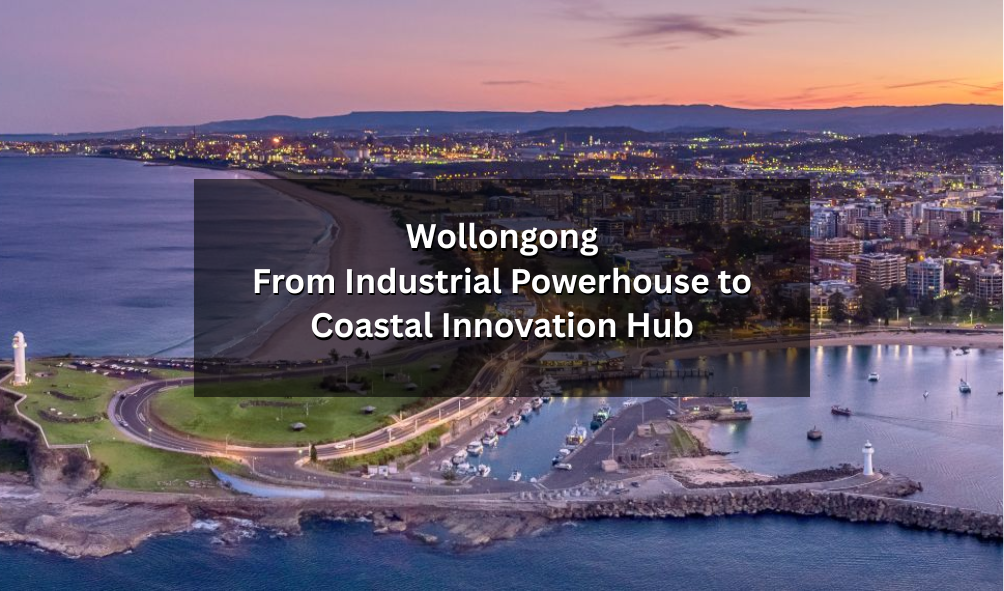
Wollongong is in the midst of a significant economic and urban transformation. The region is actively shifting away from a reliance on heavy manufacturing toward "knowledge-based" industries.
-
Innovation & Tech: The growth of the innovation precinct is attracting startups and tech professionals, moving the needle from "industrial port city" to "coastal innovation hub."
-
Urban Densification: To accommodate steady growth—with projections suggesting the population could exceed 400,000 by 2040—the CBD is undergoing a major facelift, characterized by increased high-density apartment living and modern student accommodation.
-
Balanced Development: Future growth is being carefully managed across "growth corridors," such as West Dapto, to ensure that the city’s unique environmental assets—its beaches, water catchments, and escarpment—are protected as the city expands.
Wollongong is no longer just a satellite to Sydney; it has become a destination in its own right. It is a city that remembers its past in the steel mills of Port Kembla, embraces its present in its surf and coffee culture, and is building its future as one of Australia’s most promising regional hubs.
Sources:
-
City of Wollongong – History and Heritage & Demographic Insights
-
Australian Bureau of Statistics (ABS) – Census QuickStats
-
Access Environmental Planning – Population and Growth Analysis 2023
-
REMPLAN – Wollongong Demographic and Community Insights
Disclaimer: The information provided in this article is based on recent demographic trends and government projections. Population data and economic forecasts are subject to change based on future development and migration patterns. This article is for informational purposes and does not constitute investment or relocation advice.